
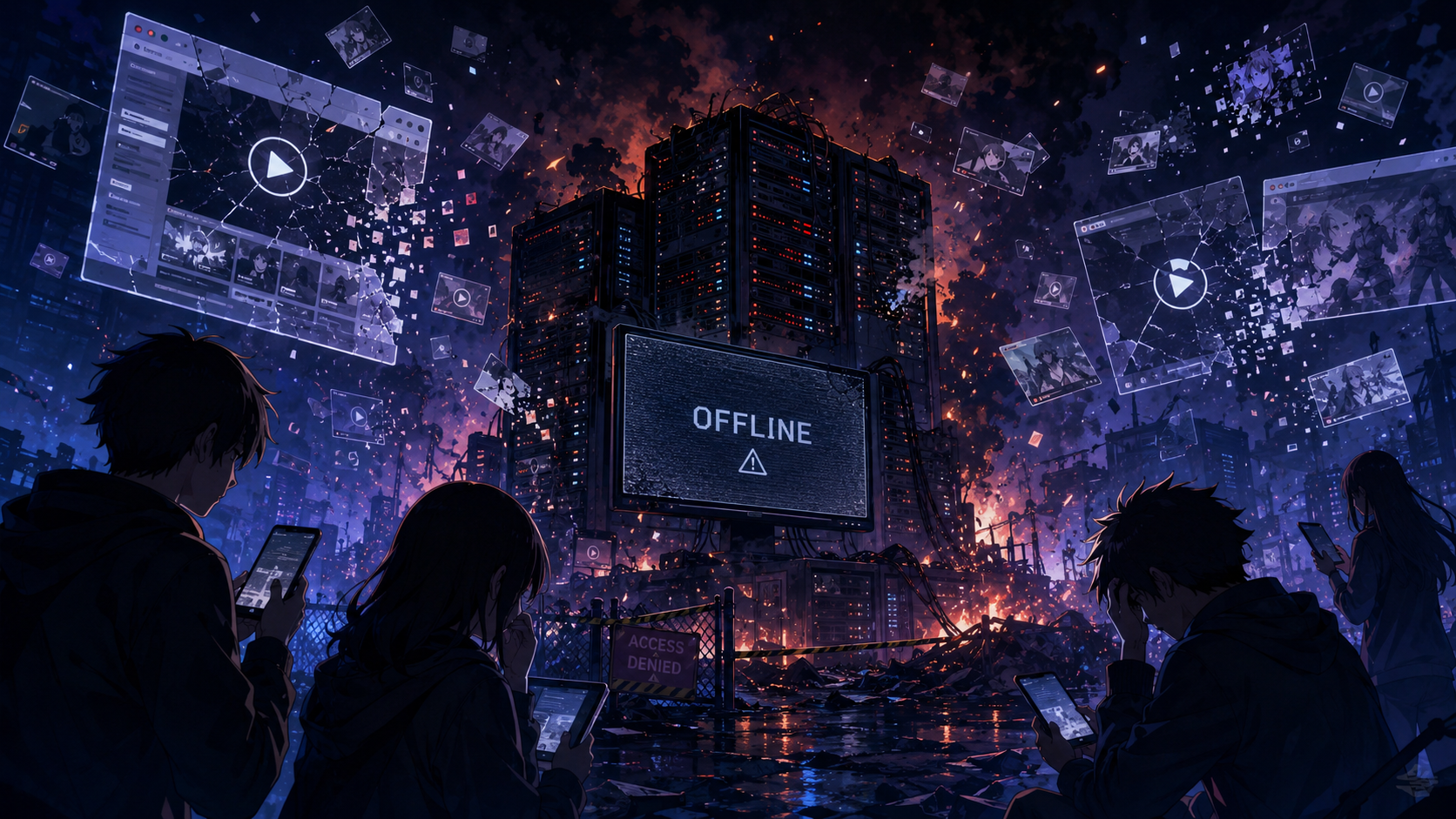
The anime streaming world may be entering a major turning point.
Over the past few months, several of the internet’s biggest unofficial anime streaming sites have either disappeared, gone offline, or been caught in the growing wave of global anti-piracy pressure. For years, these sites were a major part of how many fans discovered and watched anime, especially when legal access was limited, expensive, or split across too many platforms.
Now, another major name has reportedly fallen: AnimeKai.
According to recent reports, AnimeKai is shutting down after a third-party data center fire allegedly destroyed or damaged servers tied to its file-hosting service. A message attributed to the site’s developer said they would no longer continue the project, telling users it was time to move on.
While the fire is being described as the immediate reason for AnimeKai’s shutdown, many fans are viewing the timing as part of a much larger pattern. Piracy platforms connected to anime, movies, and TV have been under increasing pressure from copyright holders, streaming companies, and anti-piracy groups. Earlier shutdowns involving names like 9anime/AniWave and HiAnime already had anime communities asking whether the old piracy era was coming to an end.
For longtime anime fans, the reaction has been mixed.
Some see the shutdowns as a loss, especially for viewers who relied on piracy sites because certain shows were unavailable in their region or scattered across multiple paid services. Others argue that the industry has changed, and that supporting legal platforms is now more important than ever if fans want studios, voice actors, translators, and creators to keep producing new anime.
Legal services may already be benefiting from the shift. Reports circulating online claim that Crunchyroll traffic has increased following the disappearance of major anime piracy sites, though the exact impact is still difficult to verify from public information alone.
Still, one thing is clear: the anime streaming landscape is changing fast.
The shutdown of AnimeKai is not just the loss of another unofficial website. It feels like another sign that the internet’s long-running piracy ecosystem is becoming harder to sustain. Between legal crackdowns, hosting disruptions, domain seizures, and rising pressure from rights holders, piracy sites are facing a much harsher environment than they did even a few years ago.
For fans, the bigger question is what comes next.
Will more viewers move to official platforms like Crunchyroll, Netflix, HIDIVE, Hulu, and Disney+? Will piracy sites continue to reappear under new names? Or will the anime industry finally be forced to address the biggest reasons fans turned to piracy in the first place: price, availability, regional restrictions, missing older shows, and platform fragmentation?
AnimeKai going dark may not be the final chapter of anime piracy.
But it may be one of the clearest signs yet that the old era is fading.
Leave a Reply