
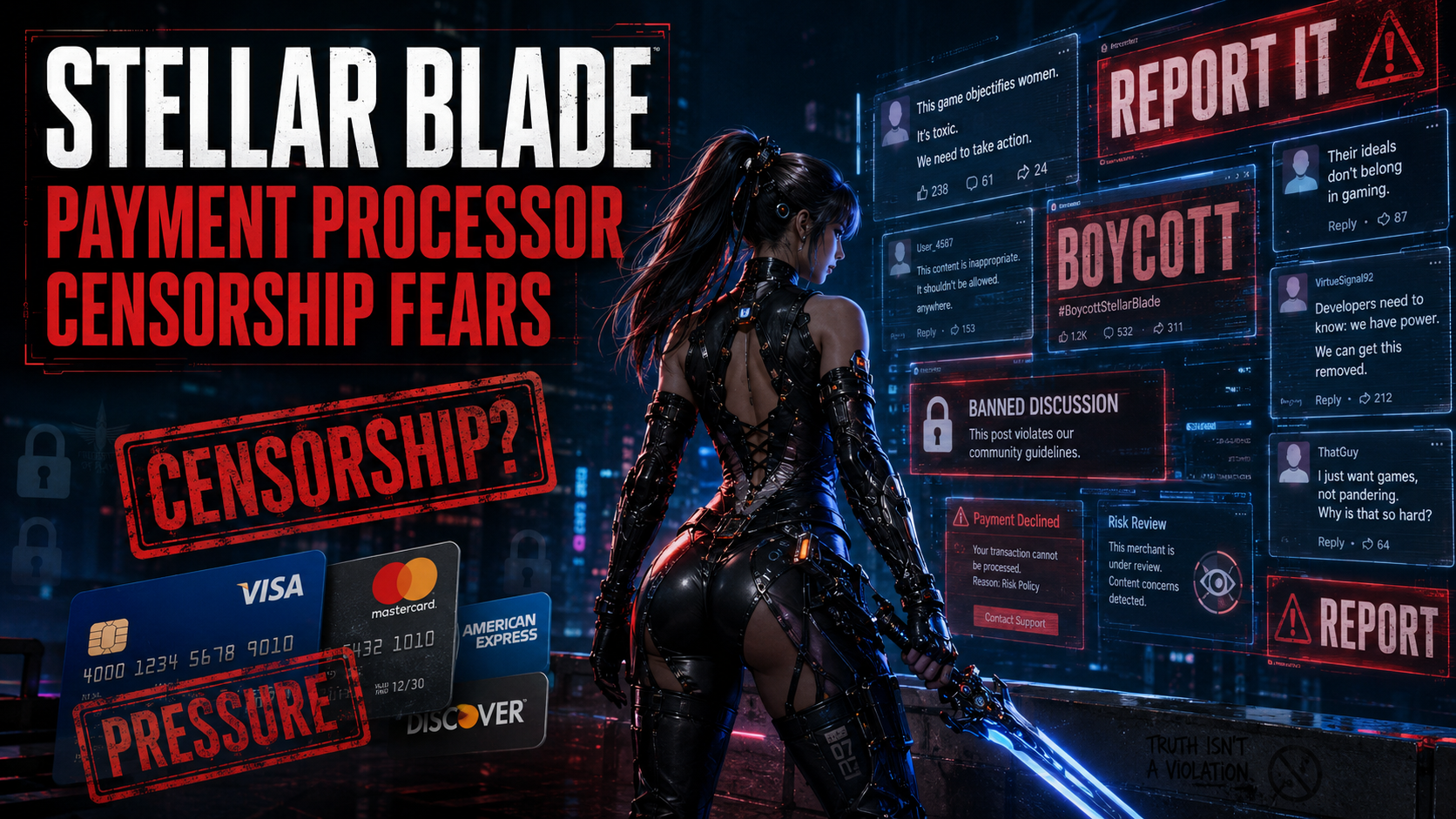
The controversy around Stellar Blade has never really gone away. From the first game’s character designs to the debates over outfits, fan service, and “censorship,” Shift Up’s action series has been caught in the middle of the larger culture war around gaming. Now, with Stellar Blade: Blood Rain announced, that fight appears to be starting all over again.
Shift Up revealed Stellar Blade: Blood Rain during Summer Game Fest 2026, introducing a new protagonist named Evie. Early previews and interviews have already made her design a flashpoint, with some critics arguing that she looks too young while Shift Up has defended its creative direction and emphasized that Evie is meant to be a stronger, more personality-driven character than Eve from the first game.
The newest controversy is not just about forum arguments or social media outrage. Some fans are now claiming that users on ResetEra and other online spaces have been reporting Stellar Blade: Blood Rain to payment processors such as Visa and Mastercard. According to secondary reporting and forum posts circulating online, the goal is allegedly to pressure storefronts or payment companies over the game’s character design and future outfits. At this stage, that claim should be treated carefully: there are screenshots, posts, and reports, but there has not been a public confirmation from Visa, Mastercard, Shift Up, or ResetEra as a site-wide institution.
That distinction matters. A few users on a forum are not the same thing as an entire community, and an angry post is not proof of a successful campaign. But the concern from fans is understandable because payment processor pressure has already affected gaming before. In 2025, platforms like itch.io and Steam faced pressure tied to adult-game content, with itch.io removing NSFW games from search and browsing after payment-related demands.
That is why this debate feels bigger than Stellar Blade. The fear is not simply that some people dislike Evie’s design. People are allowed to dislike a character design. They are allowed to boycott a game. They are allowed to criticize Shift Up. The real issue begins when the argument shifts from “I do not like this game” to “payment companies should make it harder for everyone else to buy it.”
That is a dangerous line.
Games should be judged by players, critics, ratings boards, and the market. If Stellar Blade: Blood Rain crosses a legal or platform-policy line, then that should be handled transparently through normal review systems. But vague pressure campaigns aimed at Visa, Mastercard, or other financial gatekeepers create a shadow system of censorship where nobody knows the rules until something disappears.
That kind of pressure also gives enormous cultural power to companies that were never meant to be art critics. Visa and Mastercard should not be deciding what anime-styled action games are allowed to exist. Payment processors are infrastructure. They should not become the final boss of creative expression.
There is also a difference between concern and control. If someone genuinely believes a design is inappropriate, they can say so. They can refuse to buy the game. They can write criticism. But trying to cut off payment access turns criticism into coercion. It stops being about debate and becomes about removing options from everyone else.
That is especially troubling in gaming, where stylized characters are common, cultural standards vary, and bad-faith accusations can spread quickly. Japanese and Korean games often use exaggerated or idealized designs that do not map neatly onto Western realism. People can argue whether those designs work, but treating every uncomfortable design choice as something that needs a financial blockade is a recipe for creative paralysis.
The irony is that outrage often gives games more attention. Stellar Blade became more visible because of controversy, not less. If the goal is to make people stop talking about Blood Rain, reporting it to payment companies may do the opposite. It turns a character-design debate into a free-expression debate, and that is exactly the kind of fight that rallies fans.
Shift Up should still be open to criticism. No developer is above discussion. But criticism should remain criticism. Boycotts should remain personal choices. Payment processors should not be used as weapons in fandom wars.
The answer to a game you dislike is simple: do not buy it.
The answer should not be: make sure nobody else can.
Leave a Reply