
The legal fight between the New York Attorney General and Valve is moving into its next stage, and the latest filing shows the state is not backing down.
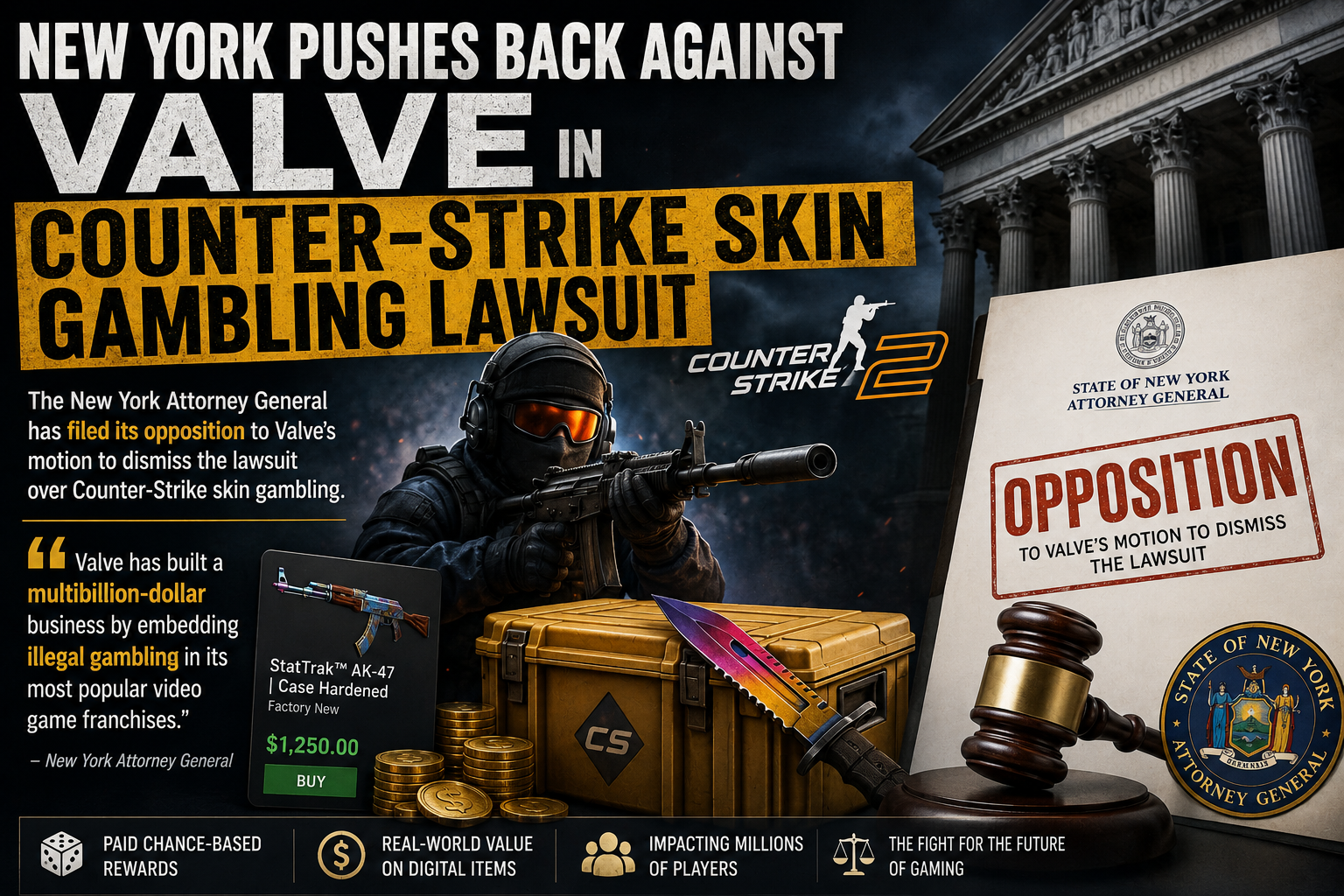
The New York Attorney General has filed its opposition to Valve’s motion to dismiss the lawsuit over Counter-Strike skin gambling. In the filing, the Attorney General argues that Valve “has built a multibillion-dollar business by embedding illegal gambling in its most popular video game franchises.”
That is a serious accusation, and it places Valve’s loot box and skin economy directly under legal scrutiny.
The lawsuit centers on the way games like Counter-Strike 2 use paid randomized rewards. Players can spend real money to open cases, hoping to receive rare cosmetic items. While many items may be common or low-value, some skins can become extremely valuable because they can be traded, sold, or used across outside marketplaces.
That is where the Attorney General’s argument becomes important. The state is not simply saying Valve sells digital cosmetics. It is arguing that the chance-based system, combined with real-world value attached to some items, makes the system look much closer to gambling.
Valve has pushed back against that idea. The company has argued that its virtual items are more like collectibles, comparing them to things such as baseball cards rather than poker chips. Valve has also denied that its systems should be treated as illegal gambling under New York law.
The Attorney General’s office originally sued Valve in February 2026, accusing the company of promoting illegal gambling through games including Counter-Strike 2, Team Fortress 2, and Dota 2. The state claimed these systems encourage users, including younger players, to pay for the chance to win rare virtual items with monetary value.
Now, with this opposition filing, the Attorney General is asking the court to reject Valve’s motion to dismiss. If the court agrees, the lawsuit would continue instead of being thrown out at this early stage.
That does not mean Valve has been found liable. It simply means the court would allow the case to move forward so the arguments can be tested further.
Still, the case could have major consequences for the gaming industry. Loot boxes, randomized rewards, skins, and digital marketplaces have become a huge part of modern gaming. If a court allows New York’s argument to proceed, it may encourage other states or regulators to look more closely at similar systems.
This is especially important because Counter-Strike’s skin economy is not just cosmetic in the eyes of many players. Skins can carry status, rarity, and market value. For some users, opening cases is not only about getting a cool item, but chasing the possibility of something valuable.
That is the exact issue regulators are focusing on.
The larger question is whether a paid chance-based system with valuable digital rewards should be treated like ordinary video game monetization, or whether it crosses the line into gambling.
For now, Valve wants the lawsuit dismissed. New York wants the case to continue. The court’s decision on the motion to dismiss may become an important moment not only for Valve, but for the future of loot boxes and skin economies across the gaming industry.
Leave a Reply