
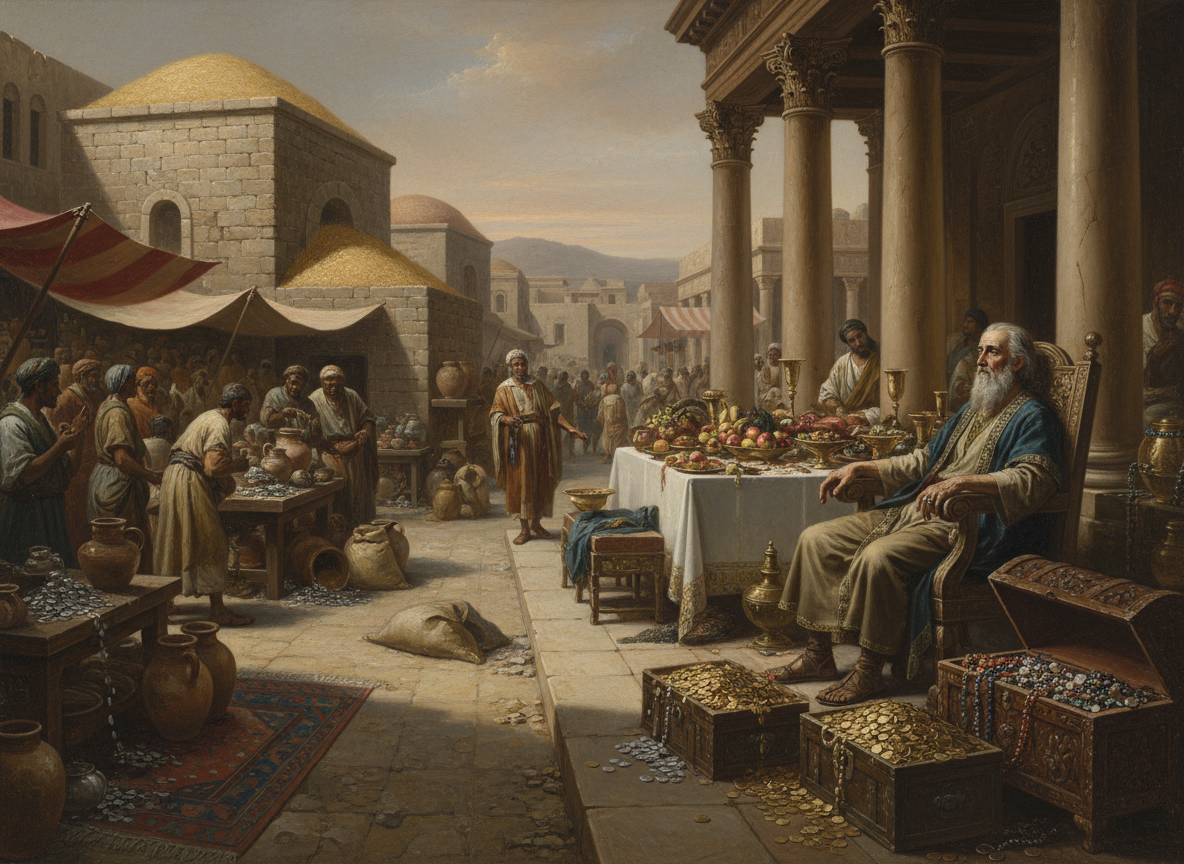
Ecclesiastes 4–6 turns from the search for pleasure and achievement to the social world: oppression, rivalry, loneliness, worship, vows, money, possessions, and the restless desire for more. The Preacher sees that wealth and work can be good, yet both become empty when they are separated from God, contentment, and human fellowship.
Oppression and the Pain of the World
So I returned, and considered all the oppressions that are done under the sun: and behold the tears of such as were oppressed, and they had no comforter; and on the side of their oppressors there was power; but they had no comforter.
Ecclesiastes 4:1, KJV
Ecclesiastes refuses to pretend that life is fair simply because God is sovereign. The Preacher looks directly at injustice and acknowledges the tears of people who lack power. Biblical wisdom includes the courage to describe evil honestly rather than covering it with easy slogans.
When Work Becomes Rivalry
Again, I considered all travail, and every right work, that for this a man is envied of his neighbour. This is also vanity and vexation of spirit.
Ecclesiastes 4:4, KJV
The problem is not work itself. Earlier chapters call the ability to enjoy labor a gift from God. The danger comes when work becomes a contest of comparison—when achievement matters mainly because someone else has less. A person can spend an entire life climbing only to discover that envy chose the destination.
Two Are Better Than One
Two are better than one; because they have a good reward for their labour. For if they fall, the one will lift up his fellow: but woe to him that is alone when he falleth; for he hath not another to help him up.
Ecclesiastes 4:9–10, KJV
Against lonely accumulation, Ecclesiastes places companionship. These verses are often read at weddings, but their principle is broader than marriage. Human beings need one another. Shared labor, mutual help, warmth, and protection are presented as answers to the isolation produced by endless striving.
Approaching God Seriously
Keep thy foot when thou goest to the house of God, and be more ready to hear, than to give the sacrifice of fools: for they consider not that they do evil.
Ecclesiastes 5:1, KJV
Chapter 5 moves from human relationships to worship. The Preacher warns against careless words before God. Worship is not performance, and vows are not bargaining chips. God is not impressed by a flood of religious speech that is disconnected from obedience.
The Hunger for More
He that loveth silver shall not be satisfied with silver; nor he that loveth abundance with increase: this is also vanity.
Ecclesiastes 5:10, KJV
This is one of Ecclesiastes’ sharpest observations. The desire for wealth does not necessarily shrink when wealth increases. It can expand with it. More possessions can mean more people consuming them, more anxiety about protecting them, and more sleeplessness over losing them.
Every man also to whom God hath given riches and wealth, and hath given him power to eat thereof, and to take his portion, and to rejoice in his labour; this is the gift of God.
Ecclesiastes 5:19, KJV
The distinction is between possessing wealth and possessing the ability to enjoy it rightly. Ecclesiastes does not teach that money is inherently evil. It teaches that money cannot give itself meaning. A wealthy person can remain miserable, while a person who receives daily provision with gratitude possesses something wealth alone cannot purchase: contentment.
Possession Without Enjoyment
Chapter 6 describes the tragedy of a person who has riches, wealth, honor, and many years, yet lacks the power to enjoy them. The lesson is uncomfortable because it overturns the assumption that satisfaction is merely one more acquisition away. Ecclesiastes calls us away from endless appetite and toward gratitude, companionship, reverence, and the enjoyment of God’s gifts in their proper place.
Books for Further Study
For readers who want to study Ecclesiastes in greater depth:
- Philip Graham Ryken — Ecclesiastes: Why Everything Matters
- Derek Kidner — The Message of Ecclesiastes
- Tremper Longman III — The Book of Ecclesiastes
As an Amazon Associate I earn from qualifying purchases.
References and Further Reading
- Ecclesiastes 4-6, King James Version
- Matthew Henry, Commentary on the Whole Bible, commentary on Ecclesiastes.
- Matthew Henry’s Commentary, CCEL
- Ecclesiastes commentaries and language references, Bible Hub
Leave a Reply