
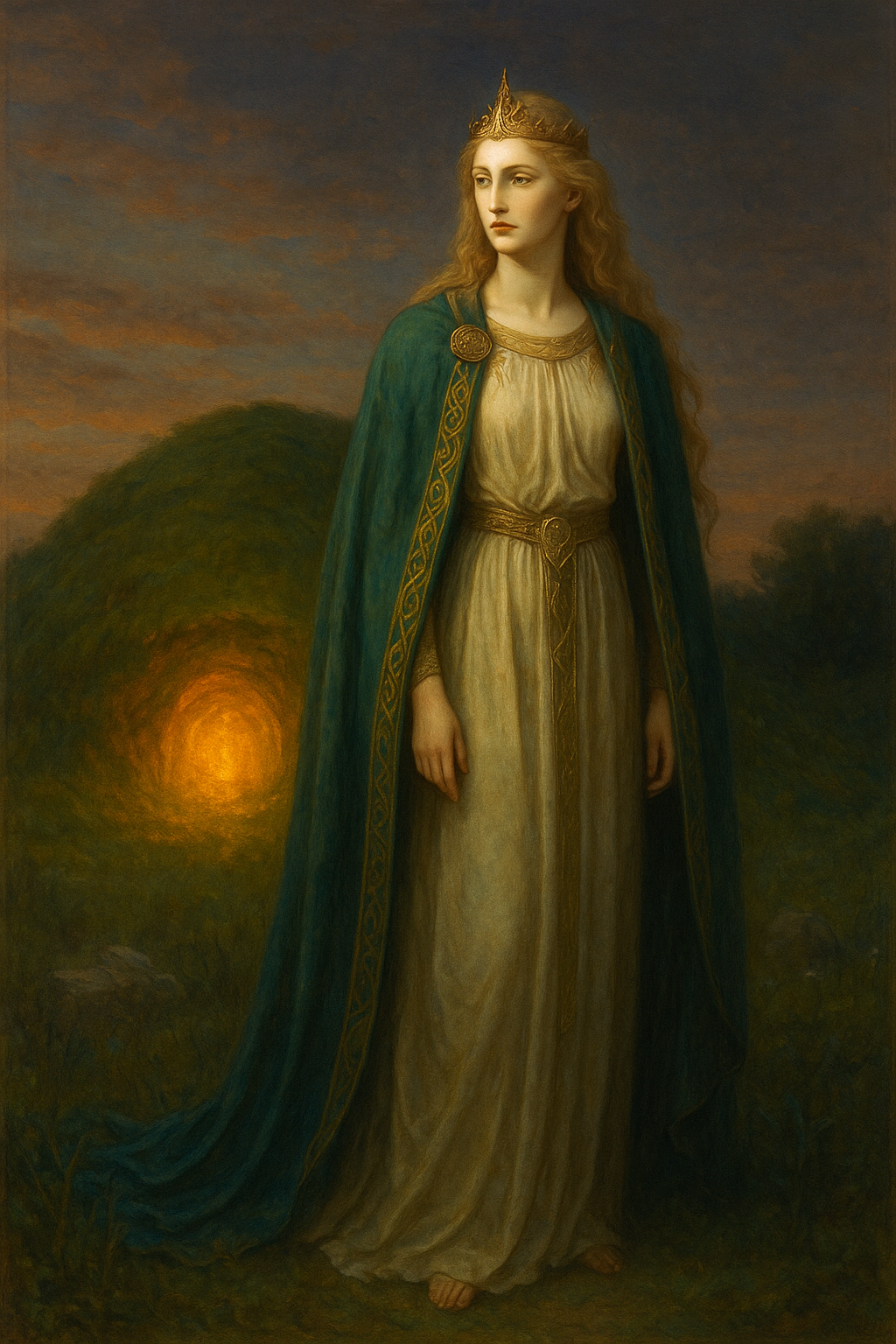
The Irish concept of “the fae” is ancient, layered, and not originally about tiny winged fairies. It stretches from pre-Christian gods to folklore spirits, shaping thousands of years of belief.
1. The Earliest Roots: The Tuatha Dé Danann
Before Christianity, Ireland’s supernatural beings were the Tuatha Dé Danann — a race of powerful, godlike figures skilled in:
- Magic
- Craftsmanship
- War
- Poetry and knowledge
They came to Ireland in mythic times and ruled it until the arrival of humans.
Their Defeat & Transformation
When the Milesians (the ancestors of the Irish people) arrived, they defeated the Tuatha Dé Danann. Instead of leaving or dying, the Tuatha:
- Withdrew beneath the earth
- Settled in hollow hills, burial mounds, and “Otherworld” realms
This is the origin of the Irish fae as we know them.
2. Aos Sí — The People of the Mounds
Once the gods retreated underground, they became known as the:
Aos Sí (pronounced ees-shee)
Meaning: “People of the mounds”
The word sídh / sídhe refers to:
- Ancient burial mounds
- Fairy hills
- Entrances to the Otherworld
These mounds were viewed as:
- Doorways to another realm
- Places never to be disturbed
- Sacred boundaries between worlds
Nature of the Aos Sí:
They are:
- Neither mortal nor divine
- Beautiful, dangerous, and extremely proud
- Capable of blessing or destroying a human life
They were not cute. They were ancient power.
3. The Fairy Faith (Creideamh Sí)
Over centuries, belief in the Aos Sí blended into everyday life and became known as the Fairy Faith — not a religion, but a set of taboos and respectful practices, such as:
| Do Not | Why |
|---|---|
| Disturb a fairy fort (ancient ring fort) | Brings misfortune or death |
| Cut a lone hawthorn tree | Said to be a fae gathering point |
| Speak badly of the fae | They hear |
| Thank them directly | It implies they owed you something — an insult |
Fairies were called:
- The Good People
- The Shining Ones
- The Neighbors
These are euphemisms. Names to avoid provoking them.
4. How Christianity Changed the Fae
When Christianity spread in Ireland, the old gods and spirits couldn’t simply be erased, so they were:
- Reinterpreted, not removed.
They became:
- Fallen angels who did not join Lucifer’s rebellion
- Spirits of the dead
- Beings “between worlds”
This kept them:
- Powerful
- Mysterious
- Neither good nor evil
This is why Irish fairies are distinct from the more harmless “Victorian fairies” of later English literature.
5. Folklore Types of Fae
Many specific beings emerged from the Aos Sí belief:
| Name | Description | Nature |
|---|---|---|
| Banshee (Bean Sí) | Wails to warn of death | Mourning spirit tied to families |
| Leannán Sí | “Fairy lover” giving inspiration | Gives genius in exchange for lifespan |
| Púca | Shape-shifting trickster (often a horse) | Mischievous or dangerous |
| Selkie | Seal-folk who shed skins | Tragically bound to land if captured |
| Aos Sí Courts | Organized faerie societies | Often ruled by powerful queens or kings |
The fae are not a single species — but an entire category of supernatural existence.
6. The Land as a Living Partner
Irish fae belief is deeply tied to:
- Ancient burial mounds
- Fairy rings (mushroom circles)
- Caves
- Sacred wells
- Solitary hawthorn trees
- Remote glens and bogs
The land itself is a threshold.
To this day, roads in Ireland have been re-routed to avoid destroying fairy forts — not out of superstition alone, but out of respect for heritage and the ancient unseen.
7. Modern Day Legacy
Even if belief is less literal now, the fae remain:
- Cultural guardians of Ireland’s ancient identity
- Symbols of the unseen world that touches reality
- A reminder that the landscape is alive, storied, and shared
People still:
- Avoid cutting lone hawthorns
- Mark fairy paths
- Tell stories of encounters
The old respect never died — it just quieted.
Leave a Reply