
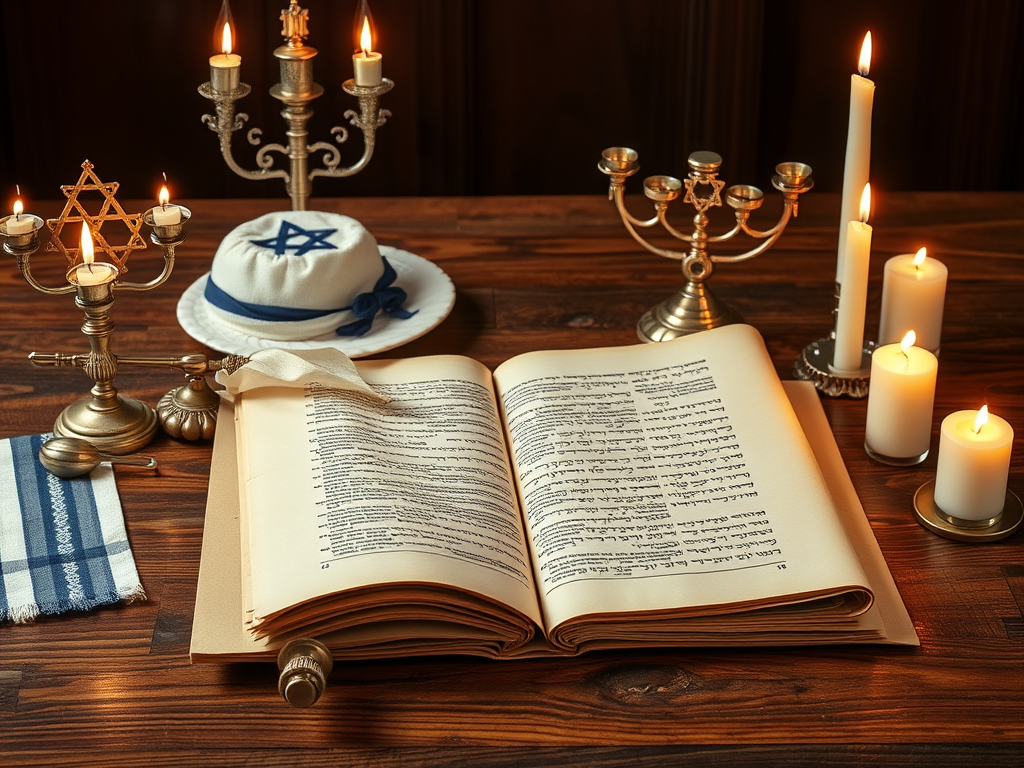
Jewish law is traditionally understood as a combination of Divine commandments and rabbinic legislation, forming a complete system that guides religious, ethical, and daily life. These laws come primarily from:
- The Written Torah (first five books of the Hebrew Bible)
- The Oral Torah (later written as the Mishnah and Talmud)
- Rabbinic rulings and centuries of commentary
The 613 commandments (mitzvot) traditionally divide into positive (“do this”) and negative (“do not do this”) laws.
Below is the simplified structure.
1. Ritual / Religious Law
A. Sabbath (Shabbat)
- No work (melacha), which includes:
- No kindling or extinguishing fire
- No writing/erasing
- No carrying in public domain (in Orthodox tradition)
- No cooking
- Ritual observances:
- Lighting candles
- Kiddush (sanctification blessing)
- Meals and rest
B. Kosher Dietary Laws (Kashrut)
- Permitted animals:
- Land animals must have split hooves and chew cud
- Fish must have fins and scales
- Forbidden:
- Pork, shellfish, most insects, scavenger birds
- No mixing meat and dairy
- Special slaughter laws (shechita)
C. Festivals and Holy Days
- Passover: No leaven
- Rosh Hashanah: New year rituals
- Yom Kippur: Fasting, no work
- Sukkot, Shavuot, Purim, Hanukkah, etc.
2. Moral / Ethical Law
These govern behavior and interpersonal obligations.
A. Justice and Fairness
- Honest weights and measures
- Fair business dealings
- No bribery
B. Treatment of Others
- Do not gossip (lashon hara)
- Do not embarrass others publicly
- Obligation to help the poor
- Obligation to rescue someone in danger
C. Sexual and Family Laws
- Marriage and divorce
- Laws of modesty (vary by tradition)
- Prohibition of adultery, incest, etc.
3. Laws of Prayer and Temple Ritual
- Daily prayer (3 times a day in Orthodox practice)
- Wearing tefillin
- Mezuzah on doorposts
- Historically: sacrifices and Temple service
(ceased after the destruction of the Second Temple)
4. Laws of Purity (Taharah)
These involve states of ritual purity.
- Family purity laws (niddah)
- Immersion in a mikveh
- Avoiding corpse impurity (relevant mainly to priests)
5. Civil and Judicial Law
Many of these overlap with ethical rules but form a legal framework.
A. Courts
- Jewish courts (Beit Din)
- Rules of testimony (e.g., two witnesses required for capital cases)
- Standards of evidence
B. Financial Law
- Loans and interest (no interest between Jews in traditional law)
- Contracts
- Property boundaries and damages
6. Rabbinic Laws
These are not found explicitly in the Torah but were instituted later.
Examples:
- Eruv (permits carrying on Shabbat)
- Chanukah candles
- Blessings before food
- Washing hands before bread
7. Identity and Community
- Circumcision (Brit Milah)
- Conversion laws
- Rules for burial and mourning
- Prohibitions against idol worship
In Summary
Jewish law covers:
- Ritual life (Sabbath, kosher, prayer)
- Ethical conduct (justice, kindness, honesty)
- Community structure (marriage, courts, leadership)
- Spiritual discipline (purity laws)
- Cultural identity (festivals, covenantal signs)
Leave a Reply