
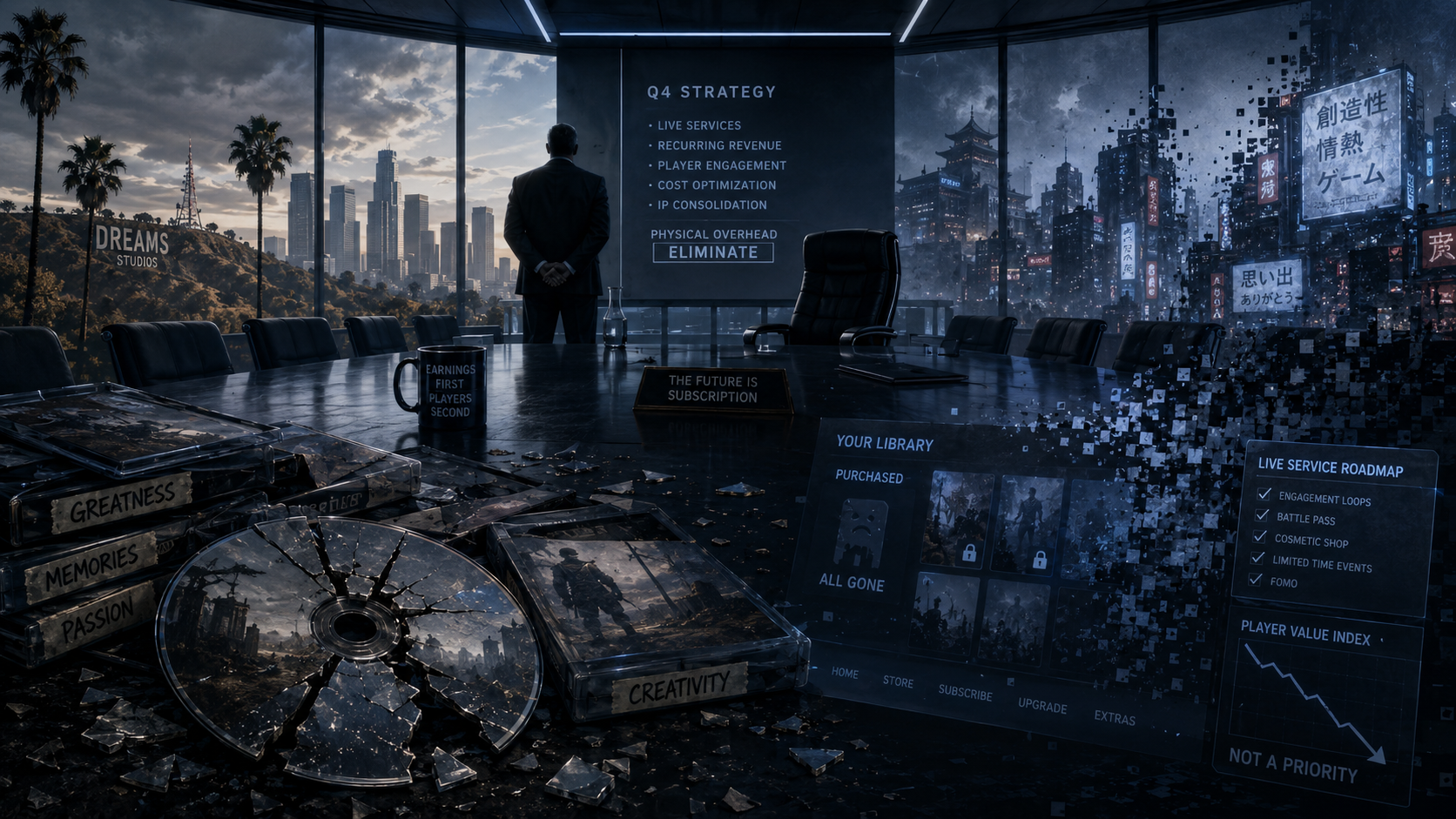
There was a time when PlayStation felt like it actually cared about players.
That may sound strange now, especially after years of price hikes, digital restrictions, live-service failures, studio closures, censorship controversies, and consumer-hostile decisions. But for many longtime fans, PlayStation once represented something very different. It was the console brand that backed strange ideas, supported Japanese creativity, took risks on bold single-player games, and understood why physical ownership mattered.
A big part of that old PlayStation identity was Shuhei Yoshida.
Yoshida was one of the public faces of a PlayStation era that felt more connected to its audience. He understood why physical games mattered. He understood why players cared about lending discs to friends, buying used copies, trading games, and actually owning the media they paid for. The PS4’s famous stance on physical, shareable discs was not just a marketing win. It was a statement about what PlayStation was supposed to be.
Then things changed.
In 2019, Yoshida was moved out of his major leadership role at Sony Interactive Entertainment’s Worldwide Studios. The official corporate language made it sound like a normal restructuring, but many fans saw it differently. To them, it looked like the old PlayStation philosophy was being pushed aside in favor of a colder, more corporate direction under Jim Ryan’s leadership.
And in hindsight, that direction became painfully clear.
PlayStation began chasing live-service games. It started looking less like the company that gave us unforgettable creative risks and more like a company trying to copy industry trends. Instead of building on the legacy of games like Shadow of the Colossus, Bloodborne, Gravity Rush, and other distinct PlayStation experiences, Sony seemed increasingly obsessed with recurring revenue, online ecosystems, subscriptions, and digital control.
The results speak for themselves.
Sony Japan Studio was gutted in 2021, removing one of the most important creative hearts of PlayStation’s history. Japanese games faced more scrutiny and censorship concerns. PlayStation Plus prices went up. Games and digital media became less secure in players’ libraries. Physical ownership became less important to the company. And now, with reports and discussions around PlayStation moving toward a digital-only future for new games by 2028, the message feels louder than ever:
PlayStation no longer wants to be the PlayStation that many fans grew up loving.
That is the harsh reminder.
This did not happen overnight. It was a slow rot. It started when Sony Interactive Entertainment shifted more of its operations and identity toward California, distancing itself from the Japanese creative spirit that helped define the brand in the first place. It continued when leadership seemed more interested in global corporate strategy than preserving what made PlayStation unique.
Hermen Hulst’s rise to power only reinforced that shift. Under the modern PlayStation structure, the company has become more polished, more controlled, and more predictable — but also less exciting. The weirdness is gone. The creative risk-taking is weaker. The feeling that PlayStation was willing to fund something strange, artistic, niche, or unforgettable has faded.
That is why so many fans are frustrated.
They are not just angry about discs. They are angry about everything the loss of discs represents. Physical media is about ownership. It is about preservation. It is about used games, lending, collecting, and not being completely dependent on corporate servers and licensing agreements. When a company moves away from that, it is not just changing how games are sold. It is changing the relationship between the player and the platform.
PlayStation used to understand that relationship.
Now it feels like the company wants control more than loyalty.
The saddest part is that the old PlayStation magic may never fully come back. We may never see another Gravity Rush. We may never see Sony take a chance on something as strange and haunting as Shadow of the Colossus. We may never see another Bloodborne, not because there is no audience for it, but because the modern PlayStation machine does not seem built for that kind of risk anymore.
That is what fans are really mourning.
They are mourning the version of PlayStation that trusted creativity. The version that stood up for physical games. The version that gave Japanese developers room to experiment. The version that felt like it belonged to players, not just executives and shareholders.
Jim Ryan may no longer be leading PlayStation, but the damage from that era still lingers. Hermen Hulst and the current leadership now carry the responsibility for what PlayStation becomes next.
And right now, the future looks far less like the PlayStation fans loved — and far more like the exact corporate machine they feared it would become.
Leave a Reply